
VEB Plasticart has a history that parallels that of Frog. Both brands have produced unique and less-known subjects that appeal to collectors and enthusiasts alike.
Just like Frog, VEB Plasticart has created some rare gems over the years. These models often feature subjects that are not commonly found elsewhere, making them a valuable addition to any collection, and like Frog some continue to be produced to this day.
The history of plastic modeling in the DDR is a fascinating tale of “Socialist Modernity.” While modelling in the West is driven by a competitive market, in the East it was a state-steered industry that balanced propaganda, educational value, and the desperate need for “hard” Western currency.
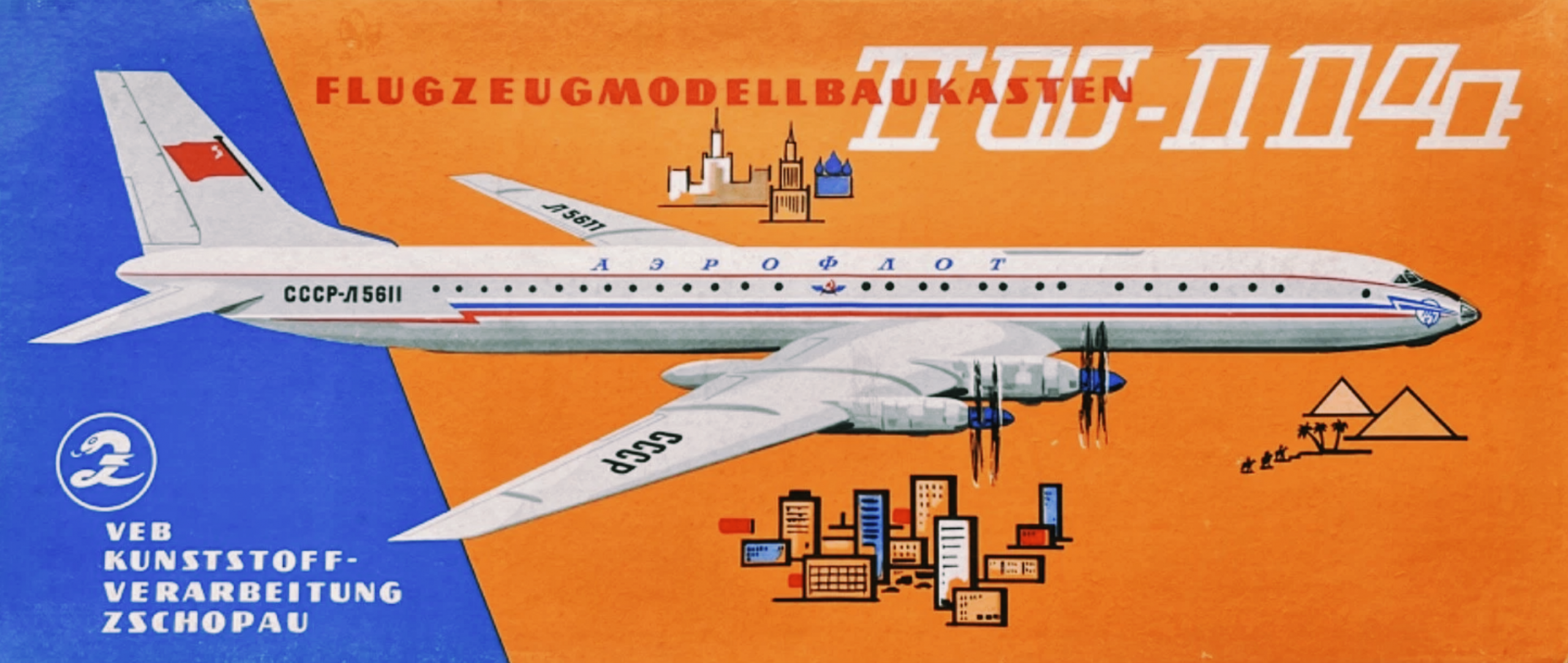
First Issue KVZ Model Kit
Tupolev Tu-114 Note the “Snake” logo
The story is dominated by one name: VEB Plasticart.
Founded in 1958 in Zschopau, this company (originally known as KVZ) was the primary source of plastic kits in the DDR. Because it was a VEB (Volkseigener Betrieb or “People-Owned Enterprise”), its production was tied to the state’s economic plans.
1958–1969 KVZ (VEB Kunststoff-Verarbeitung) The “Snake” logo era.
1969–1973 MPKAB Part of a larger toy combine.
1973–1989 VEB Plasticart Zschopau The classic blue-box era.
Most Plasticart aircraft were produced in 1:100 scale. This was unusual compared to the Western standard of 1:72, but it was chosen to match the East German TT-gauge (1:120) and HO-gauge (1:87) model trains, allowing hobbyists to integrate planes into their railway layouts.
The Subjects: The catalog was a mix of Soviet subjects and surprisingly diverse international subjects:
-
- Eastern Bloc Icons: The Ilyushin Il-62, Tu-134, and the legendary MiG-21.
- Space: They produced famous kits of the Vostok rocket and the Buran/Energia shuttle.
- To generate export sales. Plasticart produced kits of the following Western subjects: Douglas DC-8-54 (1/100) 1963
Sud Aviation SE210 Caravelle (1/100) 1963
de Haviland DH106 Comet-4 (1/100) 1964
Boeing 727-100 (1/100) 1968
Hawker-Siddeley HS121 Trident 3 (1/100) 1973
Dassault Mercure (1/100) 1975
Junkers G23/24 (1/72) 1987 (Note: this was the only 1/72 kit in the range and has since been released by Revell Germany)
-
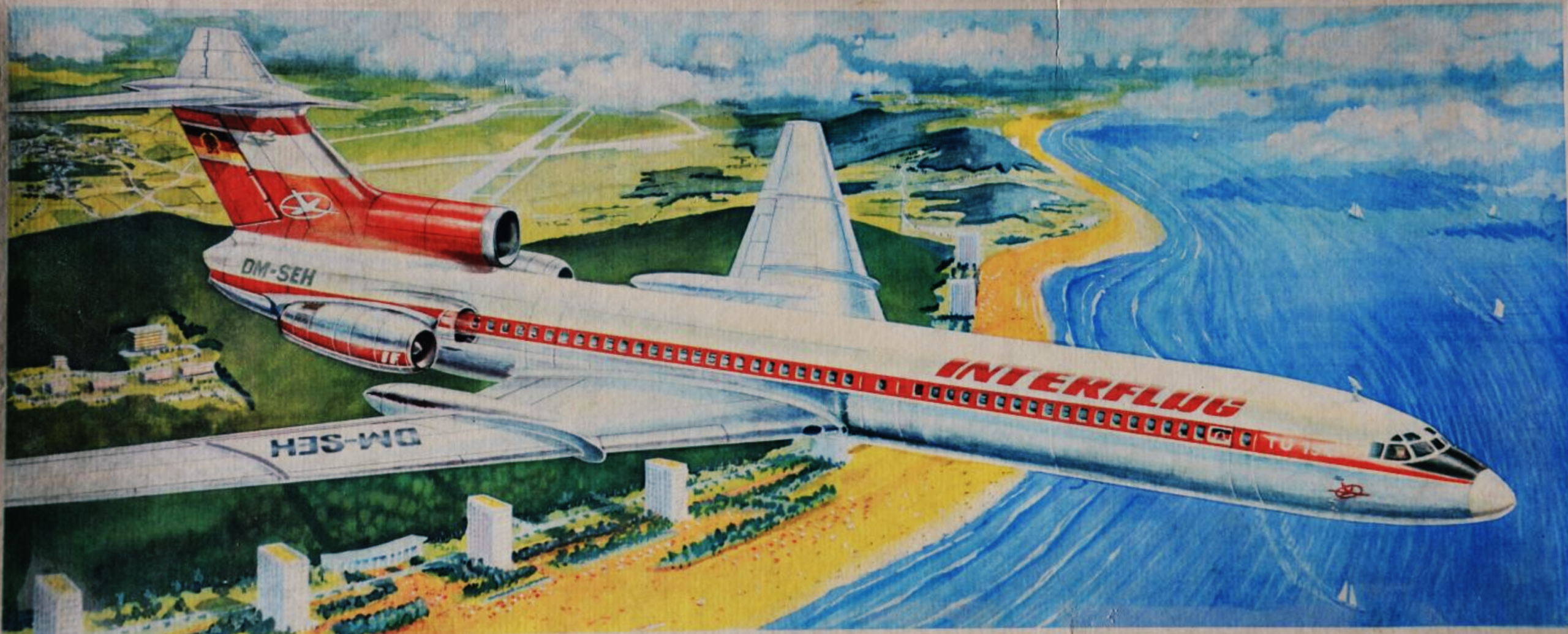
Tupolev Tu-154 1973 issue
In the late 1950s, Walter Ulbricht launched the “Chemieprogramm,” a state initiative to modernize the DDR through plastics. Plastic wasn’t just a cheap material; it was a symbol of the future. This gave model manufacturers priority access to synthetic resins (polystyrene), which were often of high quality even if the moulding technology lagged slightly behind Western giants like Revell or Airfix
While Plasticart handled the sky, other state company’s handled the ground:
- PIKO: model railways. Based in Sonneberg, PIKO Railways were exported all over the world.
- Espewe / Permot: These brands focused on 1:87 (H0) scale vehicles. They produced remarkably detailed models of East German staples like the Trabant, Wartburg, and IFA trucks.
- Vero produced a large range of buildings.
In the DDR, hobbies were often organized through the GST (Gesellschaft für Sport und Technik). Modeling wasn’t just for fun; it was “pre-military training.” Building a MiG-21 was seen as a way to familiarize children with technology and aviation, potentially preparing them for service in the NVA (National People’s Army).
After the fall of the Berlin Wall, VEB Plasticart struggled to compete with the flood of high-tech kits from Tamiya and Revell. The company went through several name changes (Mastermodell, Nu-Bee, Playfix) before the original moulds were scattered.
Today, VEB Plasticart are high-value collector items. They are well known for their:
- Thick, Sturdy Cardboard Boxes: Unlike the flimsy Western boxes, Plasticart boxes were built to last.
- Unique Art Style: The box art often had a distinct, almost painterly socialist-realist aesthetic.
- Included Glue and Paint: Many kits came with paint and glue which, after 40 years, has usually turned into a solid amber rock or evaporated entirely.
Are you a collector looking to identify a specific vintage kit? Please send us a message and we will try to help.
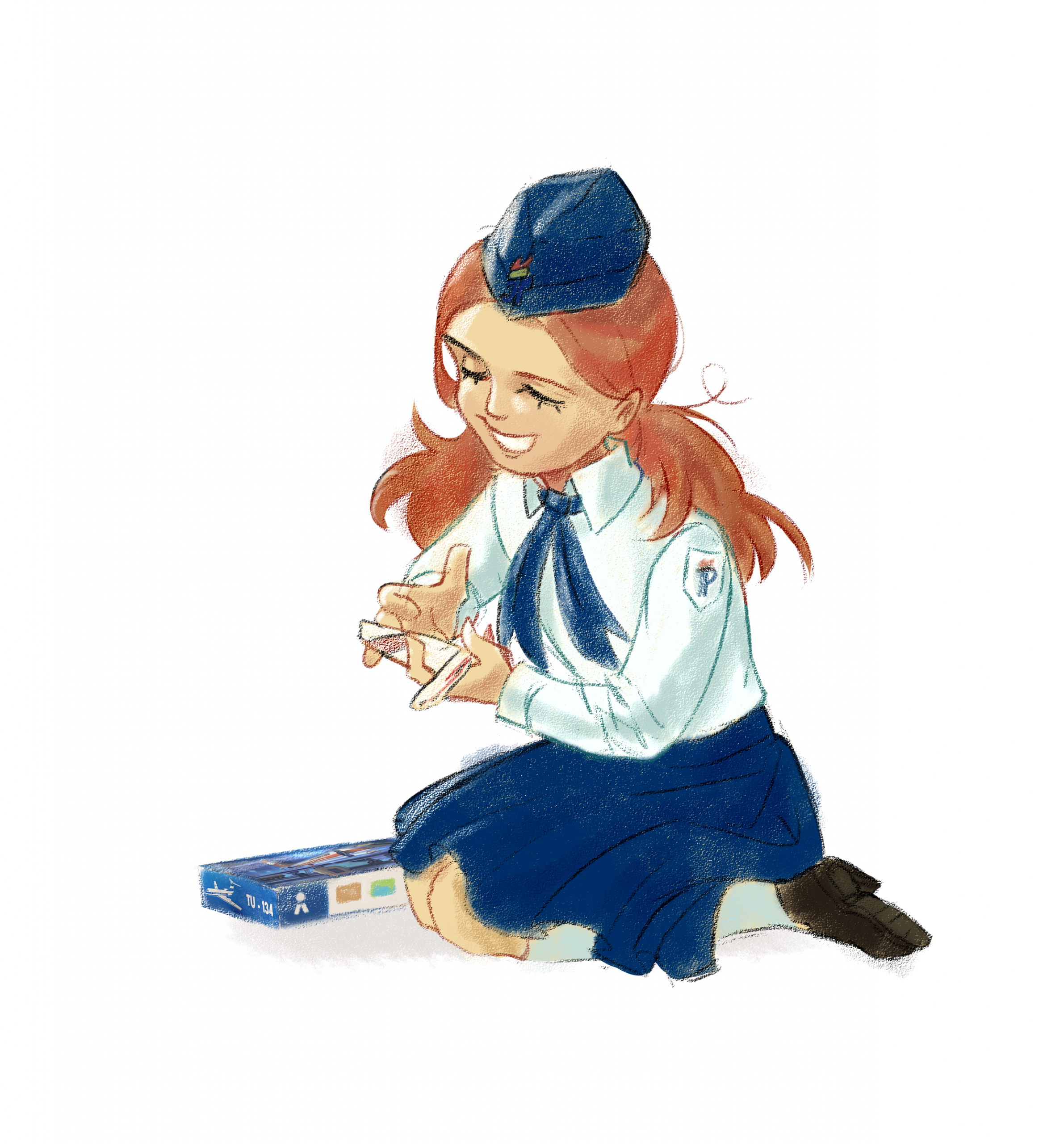
Working on my TU-134 from VEB Plasticart